What would I do if I were isolated on an island or on an uninhabited planet? is something I sometimes think about. A lot of the time, this takes the form of making lists of gear that I’d want to bring along in such a scenario. I find this relaxes me and helps me sleep.
This brings me to The Wall, a novel by Marlen Haushofer. While technically science fiction, it’s more related to adventure novels like Robinson Crusoe. It’s a story about a woman who spends a night alone in a cabin in the Austrian alps. The next morning, on her way to the village, she discovers that she’s trapped inside a transparent wall that surrounds the cabin and its surrounding valley. Time has stopped outside the wall. From then on, she has to survive by herself with only a dog, a cow and a cat as company. Just as the time loop in Groundhog Day remains an unexplained plot device throughout the movie, the wall in Haushofer’s novel isn’t explained. Instead, like Groundhog Day or Robinson Crusoe, the point of the novel is to imagine what if.
The Wall got good reviews when it came out, but I didn’t enjoy it much. One reason is that while I read the novel in its English translation, I could still sense the original Austrian-German prose behind it. This is as disconcerting as hearing the echo of your own voice while you speak. While this isn’t Haushofer’s fault, I doubt that I’d have enjoyed it much in the original German either. It’s too monotonous.
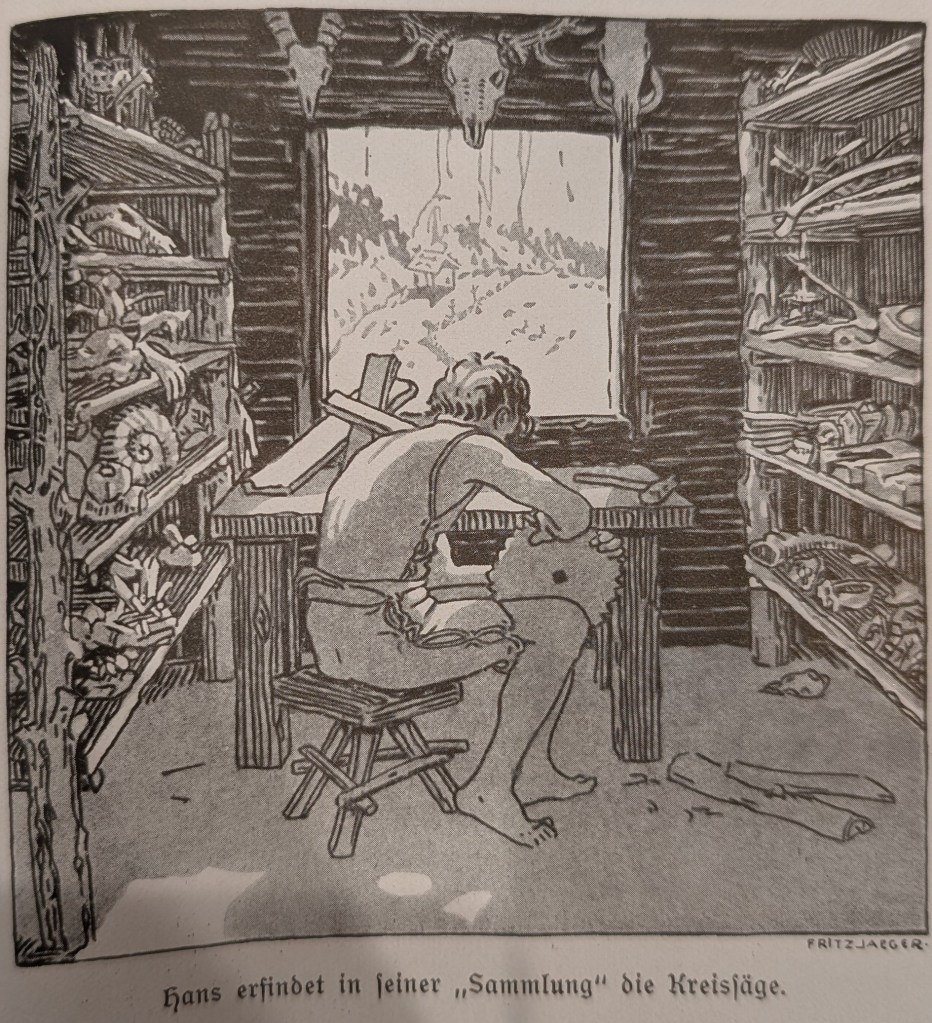
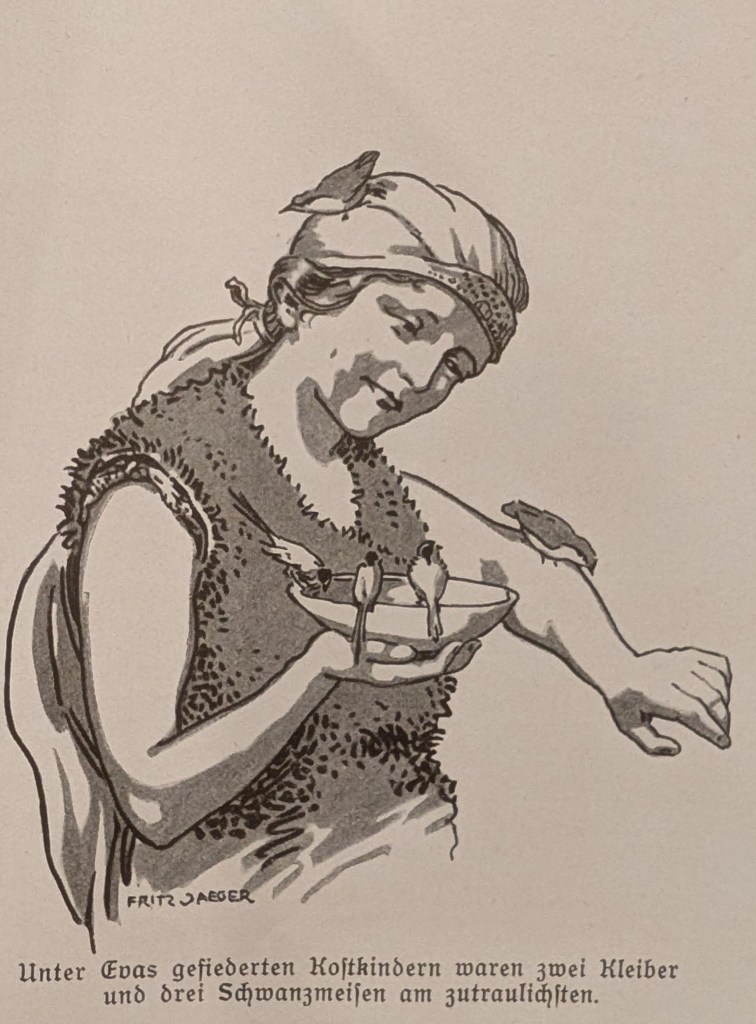
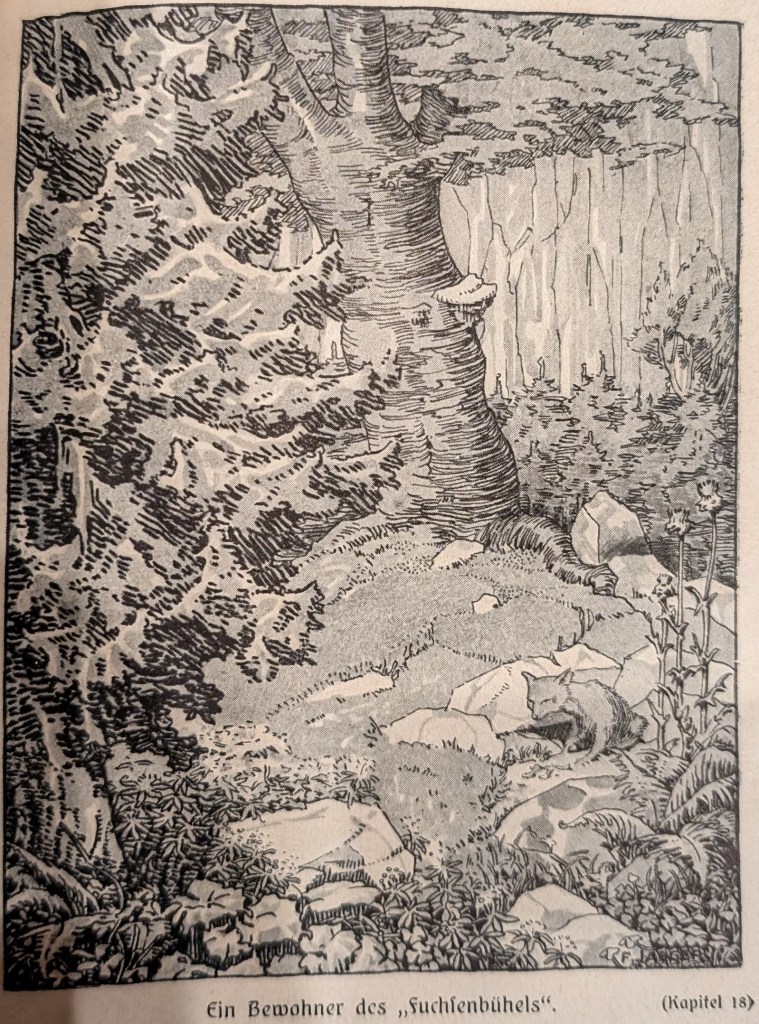
Haushofer’s novel isn’t the only one that imagines what it’d be like to survive in an Austrian valley without any contact with the outside world. When I was eight years old, I read Die Höhlenkinder (“the Cave Kids”) by Alois Theodor Sonnleitner. It’s a series of books published around the time of World War I but set in the 17th century. A boy and a girl have to flee from prosecution and survive in isolation in a remote alpine valley they can’t escape from. Even though I read Höhlenkinder for the first time 32 years ago, I liked it enough to include the books in the small set brought with me when I moved to California. Until I came across Haushofer’s Wall, they had remained unopened on my bookshelf. When I leafed through them as I was writing this post, I realized that I not only loved them because of their story but also because of their illustrations.
 Nehaveigur