Freedom is a slippery concept:
Almost every moralist in human history has praised freedom. Like happiness and goodness, like nature and reality, the meaning of this term is so porous that there is little interpretation that it seems able to resist.
Isaiah Berlin
When thinking of freedom, it can be helpful to distinguish between two types:
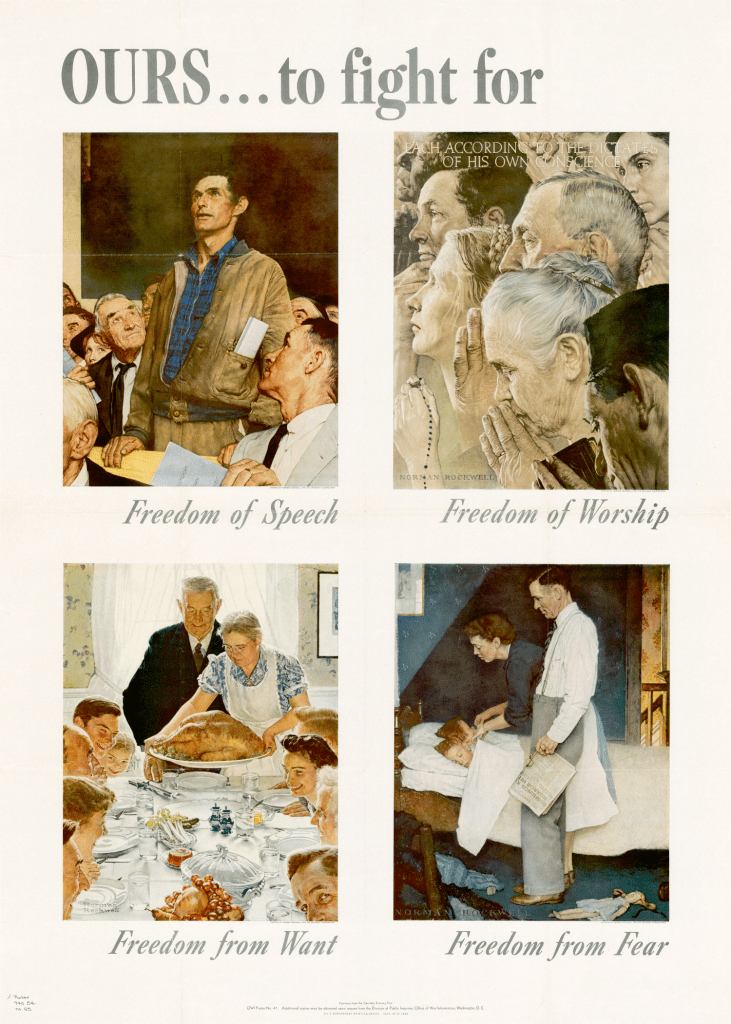
- Freedom from constraints imposed by others. Examples are freedom of speech, freedom of religion, and freedom of movement. Freedoms in this category are negative liberties.
- Freedom to realize goals. Examples are freedom from want (the right to jobs, economic security and an education etc.) rand the right to vote. Those are positive liberties.
The distinction between negative and positive freedoms was first made by philosopher Isaiah Berlin in 1958. The full text of his lecture is here. Berlin’s concepts of liberty are different from the other concepts I write about here. They’re normally connected to the natural world rather than how we think about society.
Those who value freedom, whether they are liberal, conservative or libertarian, agree on the value of negative freedoms. There is much disagreement which positive freedoms the government should guarantee, and how much. As Berlin himself pointed out, positive freedoms are occasionally be taken as a pretext to impinge on negative freedoms.
 Nehaveigur