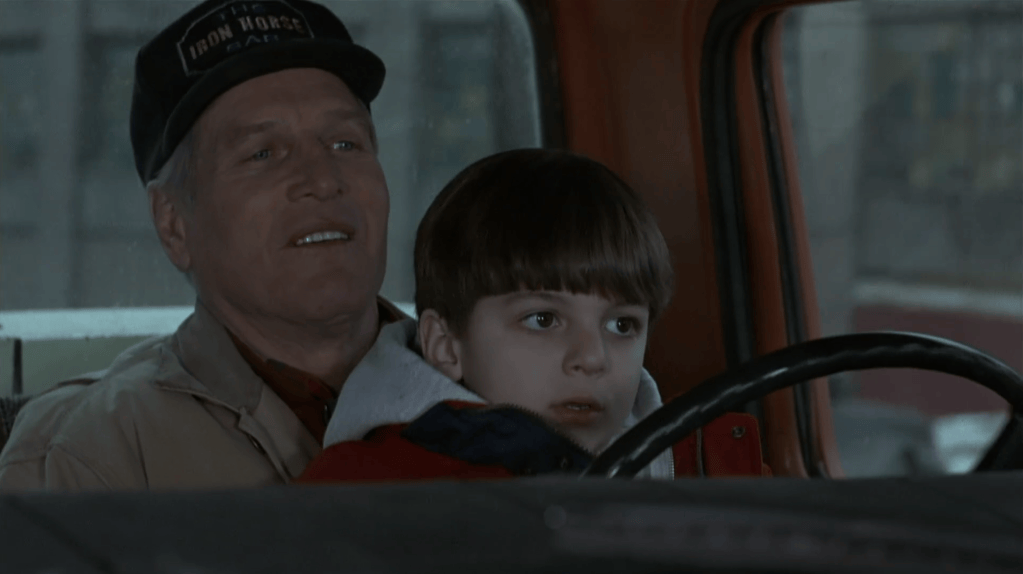
In the 1995 movie Nobody’s Fool, Sully, the protagonist, lets his six-year old grandson drive his truck. After driving a little, his grandson comments, “It’s jiggling.”
Sully replies: “Nah, it not jiggling, it’s wobbling. That’s what old trucks do, they wobble.”
“I like it. It’s a nice truck.”
“Yeah it is. It is kind of a nice truck, isn’t it.”
More recently, Brett McKay interviewed Ian Bogost. Bogost has written a book called The Small Stuff. It’s about the small joys of sensory experience: Touching grass, and knobs, and buttons, and how it feels to steer an old truck.
McKay takes a shot at defining gratification. “So, gratification is kind of like, Stop and Smell the Roses?“
Here’s Bogost’s answer:
Or, don’t stop and smell the roses. Just smell them, you know? There is no need to stop. You smell the roses. You’re walking past them, and… oh, there’s roses. That’s it.
That’s an interesting distinction, because we have this sense that doing things of any kind requires not doing something else, that we have to steal time or energy from big-picture, big-stuff accomplishments in order to do small stuff, and I think that’s where you overlook them. So just smell the roses, instead of stop and smell the roses.
It’s interesting. I totally agree with that [it’s about paying attention], but I have actually tried not to use attention as the way of helping people find the feeling of gratification. Because it puts the effort back into your brain. We live in our heads so much. We’re tied into knots all the time about how we can feel better. And attention is like, “oh I need to pay attention” or “I forgot to pay attention to feel the tink of the dishes against one another as I was putting them away in the cupboard. Darn! I missed that opportunity for gratification!”
That’s not really how it works. It’s more like acceptance than attention […] There is this enormous surplus of sensory life that’s always available to us. It’s like that’s constantly running, and all you need to do is tip your toe in to feel its current. It’s always there, it’s always accessible as long as your physical body is in the world. That’s a shift that I think is really important, that shift from attention to acceptance.
“What if I keep a gratification journal? Make sure you have that many gratification experiences…” You’re just going to lose if you take that attitude.

